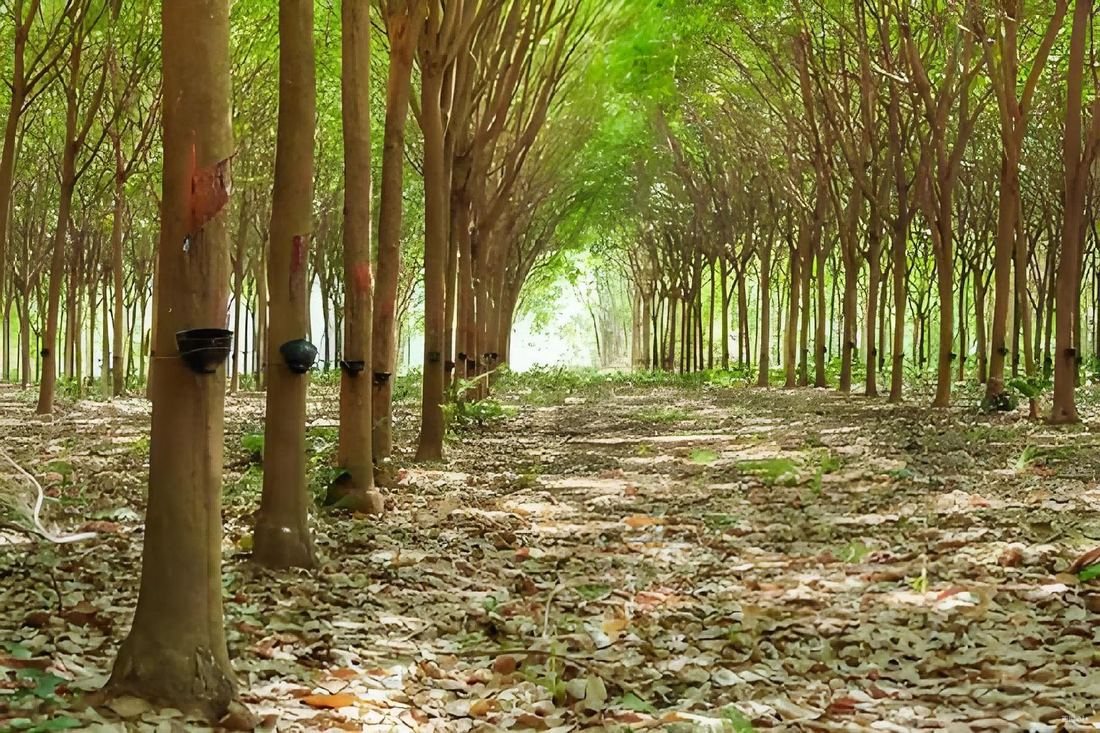
Intelligent solutions for the
entire natural-rubber value chain
Jinkun International Technology (Guangzhou) Co., Ltd. is a system integrator of rubber tapping robots and intelligent rubber factories, providing plantations and rubber processors worldwide with one-stop solutions covering intelligent tapping equipment, deep-processing lines, digital operations and managed agri-services.
Reduce Tapping Labor Costs. Protect Your Trees. Keep Your Plantation Productive. These are our goals, not guarantees: configuration and expected results are assessed per plantation.
Are you a plantation owner or a rubber processor?
I run or manage a rubber plantation
Reduce tapping labor cost, protect yield, and assess whether automation fits your plantation.
Plantation tapping solutions →I run a rubber processing factory
Improve line efficiency, automation and traceability.
Intelligent rubber factory →Jinkun International Technology (Guangzhou) Co., Ltd. is a system integrator of rubber tapping robots and intelligent rubber factories: it integrates world-leading harvesting equipment, deep-processing lines and digital technology, is responsible for solution design, system integration and project coordination, and acts as the single project contact that coordinates equipment manufacturers and local partners; equipment is sourced from different manufacturers according to the solution, and manufacturers may take part in design, implementation, training and after-sales per project, with roles set out in the project contract.
Harvest → Process → Operate → Service, delivered as one chain
Four business lines cover the full natural-rubber chain — tapping, collecting, managing, nurturing, processing and delivery. Buy a single machine or plan the whole chain.
Intelligent Tapping Equipment
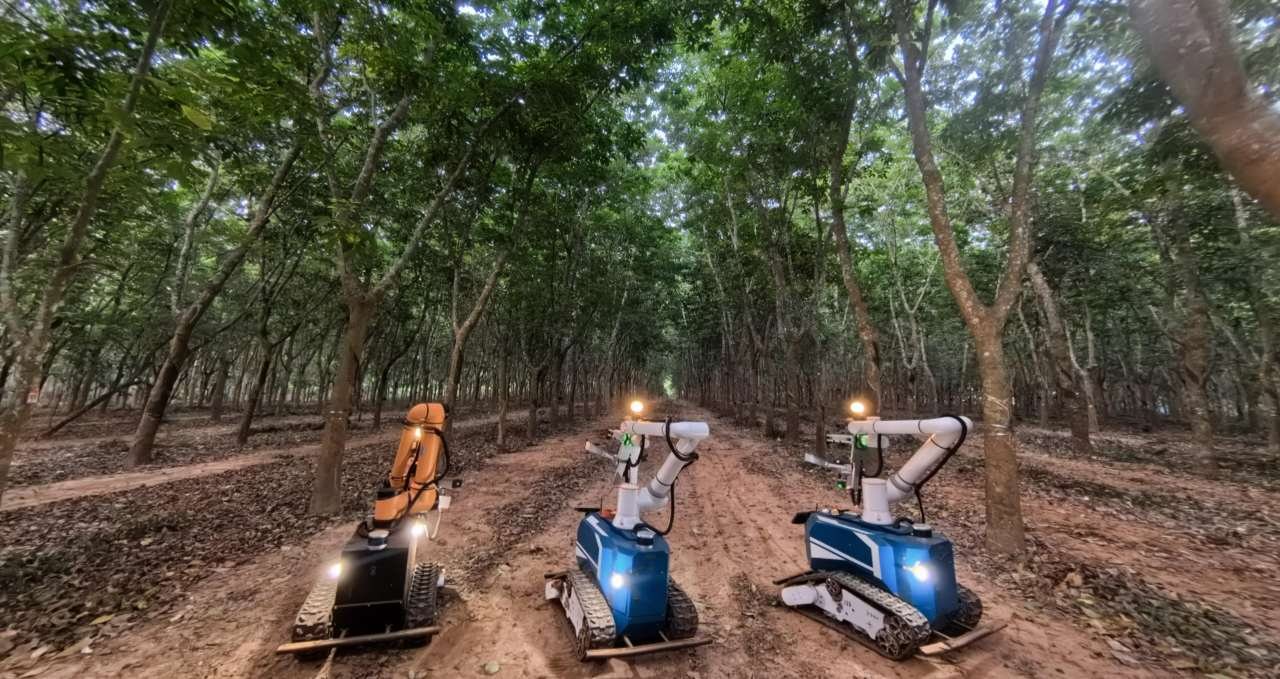
Three categories: electric tapping knife (handheld), tree-mounted tapping machine (one machine per tree) and mobile tapping robot with Robo-Ox.
View tapping machines →Intelligent Rubber Factory
A 60,000-tonne deep-processing line: 17 core machines, a 21-step process, and about 60% less labor on the intelligent processing line.
View the factory →Digital Operations
The plantation-side smart-plantation system (part of the managed agri-service) linked with factory-side SCADA + MES — data traceable end to end.
View the smart plantation →Managed Agri-Service
Zero hardware cost for plantation owners: a project team takes over tapping, collecting, managing and nurturing, paid annually or by latex revenue share; Jinkun coordinates and roles follow the service contract.
View agri-service →Tapping equipment in detail
Tree-mounted machine details → Mobile robot details → Tree-mounted vs mobile →
Evidence and limits: Field evidence Operating conditions (rain, connectivity, terrain)
How do we deliver a project? Assess first, then quote
Clone, tree age, tapping system, terrain, climate and connectivity differ widely between plantations, so no standard price or result is promised before we understand your plantation.
- Step 1: Initial assessmentShare basic plantation details to judge whether automated tapping fits
- Step 2: On-site validationSmall-scale pilot or site validation to confirm fit
- Step 3: Solution designTree-mounted, mobile, electric knife or a combination
- Step 4: Custom quotationA formal quote based on assessment and validation results
- Step 5: Implementation and deliverySupply, installation, training and after-sales
Five industry-wide challenges, answered one by one
Public reporting puts labor at roughly 60% of the total input of a rubber tree, while the tapper workforce keeps ageing — hard to hire and expensive to keep. The same squeeze is hitting plantations from Hainan to Kerala.
| Pain point | What it looks like | Our approach |
|---|---|---|
| Tapper shortage & ageing | Skilled tappers retire faster than they are replaced; wages keep rising | Tapping equipment + managed agri-service |
| Dangerous night tapping | Pre-dawn work is exhausting and risky; young workers stay away | Mobile tapping robots for night work (project validation required) |
| Inconsistent quality, tree damage | Uneven skill wastes bark, shortens tree life and cuts yield | Controlled cut depth, 1.3 ± 0.2 mm (tree-mounted, Product specification) |
| High processing labor cost | Breaking, drying and packing are labor-intensive and inconsistent | 60,000-tonne intelligent processing line |
| No traceability | Plantation and factory data live apart; decisions run on gut feel | Smart plantation + SCADA/MES |
Industry background sources (Chinese): CNR (labor ≈ 60% of total input), People.cn, Aug 2026; Measured figures are on each product page.
Numbers with clear attribution
Every figure is tied to the specific product or scenario it was measured in — never mixed, never inflated.
| Metric | Value | Product / scenario |
|---|---|---|
| Tapping time per tree | 5-10 s | Electric tapping knife (handheld) |
| Fully automatic tapping per tree | approx. 47 s | Tree-mounted intelligent tapping machine (product specification) |
| Cut-depth control | 1.3 ± 0.2 mm | Tree-mounted intelligent tapping machine (product specification) |
| Machines managed per worker | 100-200 units | Tree-mounted machine (manual: 60-80 trees) |
| Robot-to-manual yield ratio | 93.58% / 86.93% / 93.75% | Managed agri-service project, three measured zones; machine type and test conditions to be confirmed (not a mobile-robot guarantee) |
| Annual line capacity | 60,000 t | Deep-processing line |
| Staff per shift | 46 → 18 | Gemas, Malaysia smart processing workshop (not tapping machines) |
| Labor cost reduction | >60% | Intelligent processing line (machine-for-man; not tapping machines) |
Equipment and services proven across regions
Harvesting equipment and the agri-service model run in real plantations across multiple countries; the Gemas, Malaysia workshop is the industry's first AI-driven primary rubber processing facility.
China's main producing regions
Hainan, Guangdong, Yunnan — harvesting equipment and smart plantations
Southeast Asia
Malaysia, Cambodia, Vietnam — processing lines and equipment export
South America
Brazil and South America distributors serving the Americas
International customers
A Japanese conglomerate, a leading global tire group and other downstream players
How much does a tapping machine cost — and does it hurt the trees?
What kind of company is Jinkun?
Jinkun International Technology (Guangzhou) Co., Ltd. is a system integrator of rubber tapping robots and intelligent rubber factories. It is responsible for solution design, system integration and project coordination, and acts as the single project contact that coordinates equipment manufacturers and local partners. Equipment is sourced from different manufacturers according to the solution; manufacturers may take part in design, implementation, training and after-sales per project.
How much does a tapping machine cost?
The standard tree-mounted automatic rubber tapping machine has an indicative price of about RMB 500 per unit (per-unit retail, FOB, gateway priced separately). Mobile tapping robots are quoted per project. Total plantation investment is assessed per plantation (country, clone, tree condition, tapping system, terrain, connectivity, climate, labor cost) before a formal quotation is issued. Request a plantation assessment →
Does machine tapping damage the trees?
The tree-mounted machine uses a profiling and cut-depth control mechanism (Product specification: cut depth 1.3 ± 0.2 mm) to improve consistency and reduce the risk of cambium damage. Depth compliance rate, bark consumption and damage rate depend on the model, test method and on-site acceptance; a small-scale controlled trial on sample trees is recommended first. Tree-mounted machine details →
How does robot yield compare with manual tapping?
Managed agri-service project measurements show robot-to-manual yield ratios of 93.58%, 86.93% and 93.75% across three zones (Agri-service project measurements; machine type and test conditions to be confirmed). In an independently published 2026 field comparison of a mobile robot, dry rubber yield was 85.92% of manual and tapping depth compliance was 34.8% (manual 80%) — see the evidence page; this is not a product guarantee. Tapping stops in rain; severe-weather safety rules and night operation are agreed per project and need validation.
How long is the payback period for a tapping robot?
It depends on tree count, equipment investment, labor cost, power, connectivity, failures, latex collection and pilot yield. We do not give a standard payback figure; we recommend starting with a pilot.
Who fixes the equipment when it breaks?
After-sales is coordinated by Jinkun; the selected equipment manufacturers and local partners take part according to each project's division of roles. Response arrangements, warranty scope and spare parts are defined in the project contract; under the agri-service model, equipment maintenance responsibilities are likewise defined in the service contract.
How much does a 60,000-tonne processing line cost, and how fast is payback?
For a line of roughly 60,000 tonnes per year, the indicative price is about RMB 15-17 million with a payback period of about 3-4 years. Every line is a custom project — final pricing follows the solution quote.
From a single machine to a full-line EPC — start here
Tell us about your plantation or factory; a Jinkun project lead will work with you directly, from consultation to after-sales.
+86 135-1279-8328
No. 16 Keyun Road, Tianhe District, Guangzhou